
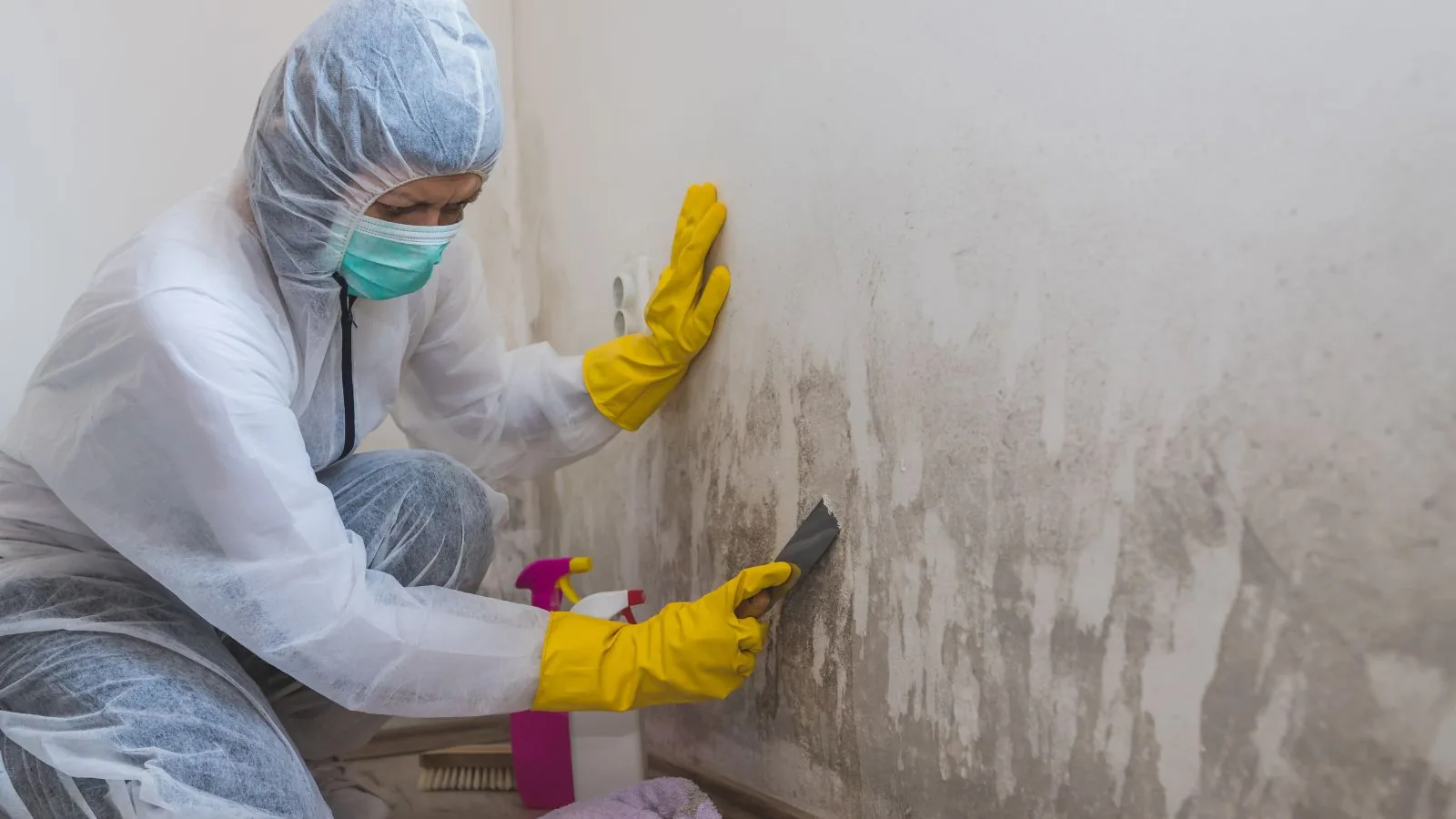
Mold remediation in Fairhaven, MA starts with finding and fixing the moisture that allowed growth. Cleaning the surface without drying the cause means mold usually returns. Call dispatch, open 24/7, if mold followed a leak or flood, and we can talk through the next step.
This page explains what remediation involves, how testing fits, and what published standards say. It does not give medical advice, and anyone with health concerns should speak with a physician.
Mold needs moisture to grow
According to the EPA, mold grows where there is moisture, and the best control is moisture control. Drying wet materials within 24 to 48 hours can usually prevent growth, and indoor humidity should stay between 30 and 50 percent.
After a leak, visible growth may be on drywall, baseboards, carpet pad, framing or stored items. Hidden growth behind walls is common after slow leaks.
Black mold and what you can see
Dark growth on a wall is often called black mold, but color alone does not identify a type. Only a lab can identify species, and species does not change the first step, which is to stop the moisture and limit the area.
Do not disturb growth by scrubbing or sanding, since that releases spores. Read how to clean black mold for what homeowners can reasonably handle.
Water on the floor right now?
☎ Call (774) 483-4896Testing, inspection and licensing
Testing can show if spore counts are elevated and what types are present. An assessment by an independent party, separate from the remediation company, avoids a conflict of interest. Ask whether Massachusetts licenses mold work for your job and what is required, and ask the Fairhaven Building Department about local rules.
Ask any company for a written scope and a plan for clearance testing.
The remediation process
The published ANSI/IICRC S520 standard guides professional mold remediation. Work usually includes containment with plastic sheeting, negative air, removal of affected porous materials, HEPA vacuuming, cleaning and drying. Moisture readings confirm the area is dry before rebuild.
For drying detail see structural drying, and for how walls are opened see wall and drywall repair.
Prevention after remediation
Fix leaks, vent bathrooms and dryers outdoors, use dehumidifiers in damp basements and keep gutters clear. The basement page and the crawl space page cover places where humidity builds.
Check your insurance. Some policies limit mold coverage, so read yours before work.
Occupant questions during remediation
Ask where you can stay during the work and which rooms will be sealed. Pets, plants and food should be moved out of the work area. Ask how the crew will protect the rest of the house from dust.
Keep the air handler off in the work zone if the crew asks. Duct systems can spread dust to other rooms if they run during removal.
Safety checklist when you find mold
EPA guidance says the key is to fix the moisture and avoid disturbing growth. This page gives no medical advice, and anyone with health concerns, including breathing problems or allergies, should speak with a physician.
The ANSI/IICRC S520 standard describes containment and removal for larger areas, which is why scrubbing a big patch is a bad idea.
- Keep children, pets and anyone sensitive out of the room.
- Do not sand, scrape or fan the growth.
- Stop the water source first.
- Turn off the HVAC fan if it serves the area.
- Photograph the area and call for an assessment.
What shapes the cost of mold remediation
Mold cost depends on how much growth there is and what it grew on.
- Affected area
- More area needs more containment and removal.
- Material type
- Porous materials are removed, hard surfaces can be cleaned.
- Access
- Attics and crawl spaces take more labor.
- Testing
- Assessment and clearance testing are separate costs.
- Moisture source
- Fixing the leak is separate from remediation.
Many policies limit or exclude mold unless it follows a covered water loss. Read your policy and ask your insurer what applies before starting.
Growth after a leak? Do not disturb it. Call (774) 483-4896 and talk through containment first.
Mold response steps
A typical order of work.
| Step | What happens | Why |
|---|---|---|
| Assess | Find moisture and growth | Plan the scope |
| Contain | Seal and set negative air | Limit spread |
| Remove | Take out affected porous items | Cleaning cannot save them |
| Clean and dry | HEPA vacuum and dry | Remove residue and moisture |
| Verify | Readings and clearance | Confirm before rebuild |
Ask good questions before hiring
Ask what is included, who tests afterward and how the moisture source will be fixed. Compare written scopes. See how to choose a restoration company for more questions.
Crews serve Fairhaven and nearby towns such as Acushnet and North Dartmouth.
Frequently Asked Questions
Can I just bleach mold?
Bleach on porous materials does not fix the moisture, and mold can return. Remove and dry instead.
Do I need testing?
Not always. Testing helps when growth is hidden or you need clearance, and an independent assessor is best.
Is mold covered by insurance?
Often limited. Check your policy and ask your insurer.
How long does remediation take?
It depends on size and drying. Written scope should give a plan, and readings decide when it ends.