
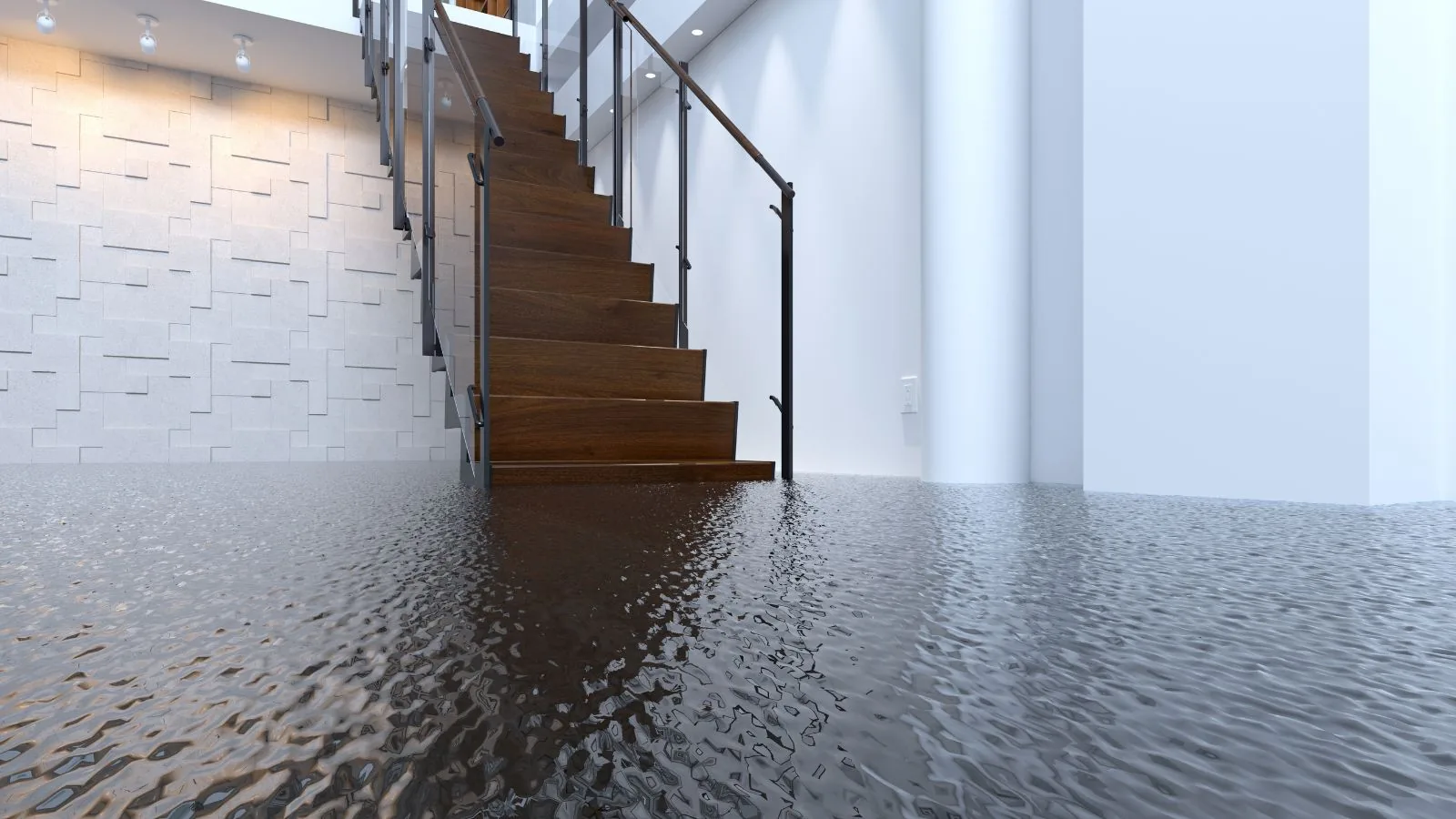
A commercial water loss in Fairhaven, MA is an emergency because downtime costs money, and the dispatch line is open 24/7. Shut off the water at the main, cut power to affected areas only if it is safe, move inventory and records off the floor and keep customers and staff out of the water. Call dispatch from a safe distance.
This page covers shops, offices, restaurants, multi-unit buildings and other commercial spaces. The process is similar to a home loss, but scale, access, tenants and business continuity change how the work is planned.
What makes a commercial loss different
Commercial buildings have larger floor areas, shared walls and often multiple tenants. A leak in one unit can affect neighbors below and beside it. Business owners also have inventory, equipment and records to protect, plus customers to keep informed.
Crews plan around business hours where possible, containing wet areas so the rest of the space can keep operating when that is safe.
Local commercial exposure
U.S. Route 6 runs through town as Huttleston Avenue and carries much of Fairhaven's commercial traffic. The town's climate vulnerability assessment also anticipates fringe flooding of the commercial and industrial waterfront, such as Union Wharf.
Waterfront and roadside businesses should know their flood zone and keep inventory off the floor. If tidal flooding is a concern, the flood damage page explains contamination and safety.
Water on the floor right now?
☎ Call (774) 483-4896Extraction, drying and protecting contents
Crews extract standing water, then dry with air movers and dehumidifiers sized to the space. Moisture maps cover walls, floors and ceilings, and affected finishes are removed only when drying cannot save them. Contents may be moved or packed out so they can be dried or cleaned.
For the drying process in detail, see structural drying and dehumidification.
Documentation for owners, landlords and tenants
Lease terms often decide who handles repairs. Photograph the damage, record moisture readings and keep a list of discarded items. These records support insurance claims and any conversation between landlord and tenant.
In multi-unit buildings, document which units were affected and where the water started. This helps if the source is in a shared line or roof.
Restaurants, retail and offices
Kitchens and bathrooms in food service concentrate plumbing and appliances, so leaks often start there. Retail spaces with carpet, drywall and merchandise have different recovery needs than offices with servers and files. Crews adjust their plan accordingly.
A grease trap or floor drain backup is a sewage issue, which the sewage backup page explains.
Safety checklist for a business water loss
Keep staff and customers out of wet areas and away from electrical equipment. ANSI/IICRC S500 treats water category and building use as part of the plan, and a business with food, records or electronics has more to protect than a bare room.
Write down what was in the affected area before anything is moved, since inventory lists support insurance claims.
- Close the main shutoff and cut power to wet zones only if safe.
- Move inventory, records and electronics above the waterline.
- Post a notice and block off wet floors.
- Photograph damage and list lost stock.
- Call the 24/7 line and your insurer.
What shapes the cost of commercial water damage
Commercial scope depends on size and use. These are the main factors.
- Floor area
- Larger areas need more equipment and more days.
- Building type
- Offices, restaurants and retail face different materials and codes.
- Water category
- Clean, gray or contaminated water changes the plan.
- Contents and inventory
- Moving and protecting stock adds scope.
- Downtime
- Staging work to reopen sooner can change the approach.
Commercial policies differ widely, and business interruption coverage is separate from property damage. Read your policy and ask your insurer or broker what applies before relying on any assumption.
Business at risk? Call (774) 483-4896 and get a scope built around your hours.
Commercial water loss priorities
Priorities differ by property type.
| Property type | First priority | Common challenge |
|---|---|---|
| Retail shop | Protect merchandise | Customer access and signage |
| Restaurant | Food safety and kitchen | Grease and drain systems |
| Office | Records and electronics | Carpet tiles and ceiling grids |
| Multi-unit building | Find the source and contain | Neighboring units and shared lines |
| Warehouse | Lift stock off the floor | Large open areas to dry |
Planning ahead
Know where your main shutoff is, keep key records off the floor and keep an emergency contact list that includes dispatch. After a loss, ask your restoration crew for a written scope before work begins.
Crews serve Fairhaven businesses and nearby towns such as New Bedford and North Dartmouth.
Frequently Asked Questions
Do you handle commercial water damage emergencies at night or on weekends in Fairhaven?
Yes. Business water losses happen overnight and on weekends, and the Fairhaven line is open 24/7. Call, describe the building and the water, and dispatch arranges the earliest response it can.
Can you work while we stay open?
Often yes, by containing the wet area. It depends on safety, size and the type of loss.
Do you document for insurance?
Yes. Photographs, moisture logs and scope notes are provided so you can submit them with your claim.
Who handles the tenant side?
Lease terms usually decide. Keep records and notify the landlord in writing.
What about inventory?
Move what is safe to move and photograph the rest. Crews can advise what can be dried or cleaned.