
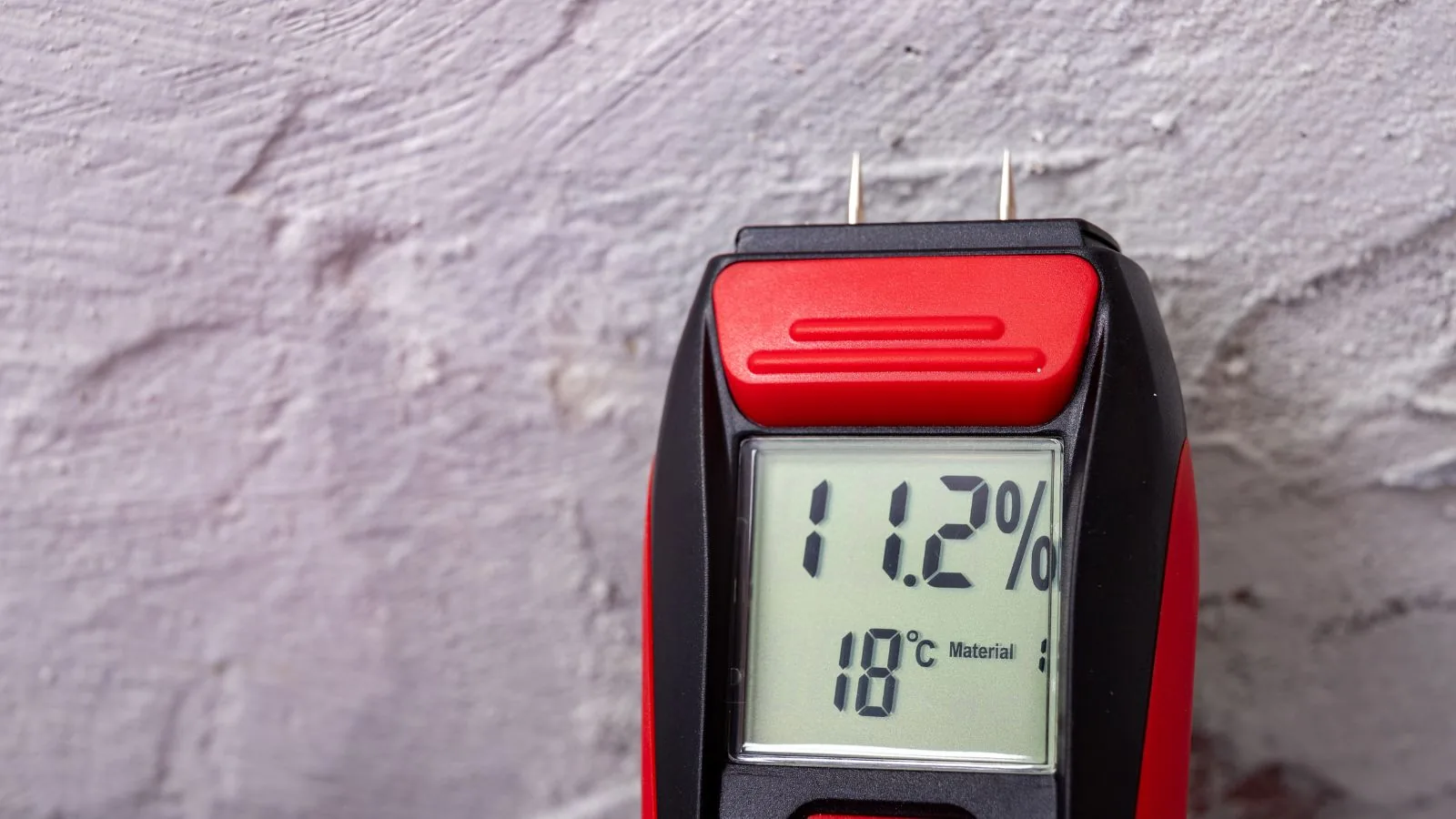
Structural drying in Fairhaven, MA is the process of removing moisture that has soaked into walls, floors and framing after water is gone from the surface. It uses moisture meters, thermal imaging, air movers and dehumidifiers, and it is tracked with readings so the finish line is measured and not guessed.
If water is still standing, start with water extraction, and call dispatch, which is open 24/7. If surfaces look dry but the house feels damp or smells musty, this page is the one that explains what is probably happening.
My walls look dry but the house smells damp
People often search for a symptom before they know the trade term. A musty smell, cold damp floors, peeling paint or warped baseboard can mean moisture is still inside materials that look dry. Surface dryness is not the same as dry framing.
The trade term is water mitigation, and the core work is structural drying. Crews measure moisture inside walls and floors and compare it with dry reference readings from unaffected areas.
Moisture mapping before equipment
A moisture map shows where water is and where it is not. Crews use pin and pinless meters, and a thermal camera that shows temperature differences which can point to damp areas. Readings are recorded on a sketch so equipment goes where it is needed.
Mapping also finds hidden wet zones, such as insulation behind a finished wall, so crews open only where moisture is confirmed.
Water on the floor right now?
☎ Call (774) 483-4896Air movers and dehumidifiers
Air movers push dry air across wet surfaces so moisture evaporates. Dehumidifiers, often low grain refrigerant models, remove that moisture from the air so it does not settle somewhere else. The two work together, and neither does the job alone.
Rooms are usually closed up during drying so the dehumidifier can work on a controlled volume of air. Heat helps evaporation, and crews adjust equipment as readings change.
How long drying takes
There is no single drying time. EPA guidance says wet materials dried within 24 to 48 hours can usually avoid mold, but deep moisture in framing and dense materials takes longer than surface drying. Crews return to check readings and adjust equipment until materials reach their dry standard.
Dense materials such as hardwood, plaster and concrete dry more slowly than carpet or drywall. The hardwood floor page explains why wood floors sometimes need special drying methods.
Drying documentation
Daily or visit-by-visit readings are logged, along with equipment placed and removed. This record shows when drying finished and helps support an insurance claim. It also protects you if a question about moisture comes up later.
If a smell lingers after drying, ask about checking for mold, and see mold remediation for how testing and removal work.
Safety checklist during drying
Drying equipment is powerful and runs for days. Keep cords out of walkways, avoid blocking air movers and never unplug equipment to charge a phone. The ANSI/IICRC S500 standard treats monitoring as part of the job, so leave equipment in place until readings say it is done.
If someone in the home is sensitive to noise or dust, tell the crew.
- Keep children and pets away from equipment.
- Do not cover or move air movers.
- Keep doors to drying rooms closed.
- Report any new stains or smells.
- Save every moisture log.
What shapes the cost of structural drying
Drying cost depends on how much of the structure got wet and how long equipment runs.
- Area and materials
- More wet area and denser materials need more equipment.
- Equipment days
- Readings, not a fixed number, decide how long equipment stays.
- Access
- Tight spaces and finished surfaces affect setup.
- Water category
- Contaminated water may require removal rather than drying.
- Rebuild
- Replacement of removed materials follows drying.
Drying is commonly part of a covered water loss when the cause is covered, but coverage depends on your policy and the source of the water. Ask your insurer and keep the moisture logs.
Walls still damp? Call (774) 483-4896 for a moisture check and a drying plan with readings.
Drying equipment and what each does
Each piece has one job, and they work as a system.
| Equipment | What it does | When it is used |
|---|---|---|
| Moisture meter | Reads moisture in materials | Before, during and after drying |
| Thermal camera | Shows temperature differences | Finding hidden wet areas |
| Air mover | Moves air across wet surfaces | Floors and walls |
| Dehumidifier | Removes moisture from the air | Closed, controlled spaces |
| Injection or cavity drying | Moves air into wall cavities | Walls that stayed wet |
Drying after a cause is fixed
Drying only works once the source is stopped. If a pipe, appliance or roof is still leaking, fix it first. The crawl space page and the basement page cover places where moisture is hard to keep out.
Crews serve Fairhaven and nearby towns such as Acushnet for drying projects of every size.
Frequently Asked Questions
Why not just run fans?
Fans move air, but without dehumidification the moisture goes back into the air and settles elsewhere. Controlled drying uses both.
Can I rent drying equipment?
This page does not offer rentals. Drying should be monitored with readings, which is why it is done as part of a restoration job.
How do I know drying is finished?
Moisture readings in affected materials match the dry reference readings from unaffected areas.
Is a high humidity reading a problem?
Indoor air should be kept reasonably dry, and EPA suggests keeping humidity below 60 percent, ideally between 30 and 50 percent.