
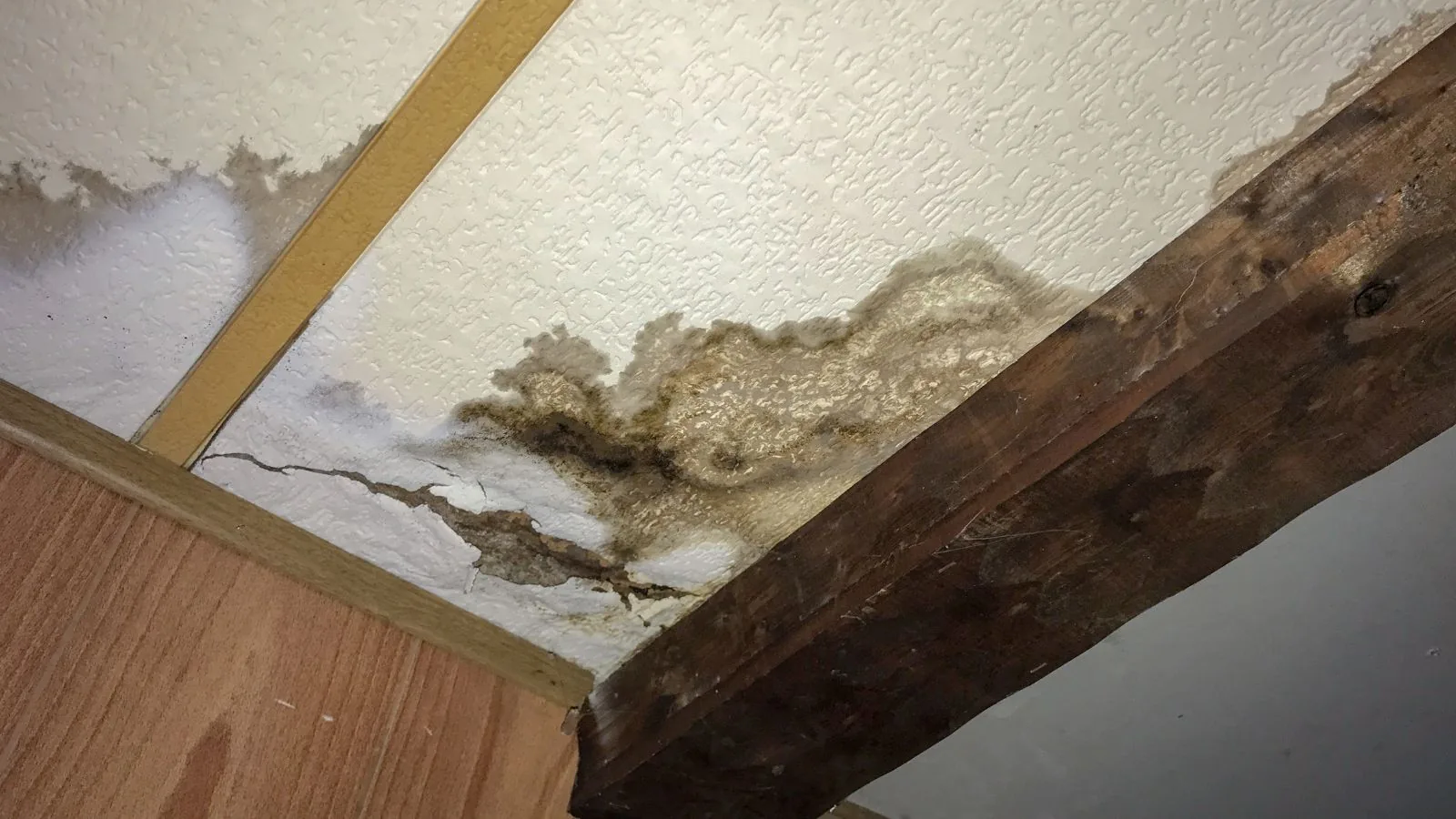
A ceiling that is stained, sagging or dripping in Fairhaven, MA is an emergency, and the dispatch line is open 24/7. Move people and furniture out from under the wet area, catch drips in a bucket and shut off the water if the source might be plumbing. Never stand under a ceiling that bulges or sags.
This page covers the finished ceiling and whatever sits above it, whether the water came from a roof leak, an upstairs bathroom, a supply line or an attic HVAC unit. The source differs, but the damage inside the ceiling follows the same pattern.
What a ceiling stain really tells you
A brown ring or yellow patch means water has been present for some time and has dried at least once. A fresh dark spot or a drip means the leak is active. Stains often appear away from the actual source because water travels along joists, pipes and roof framing before dripping through.
Sagging means drywall or plaster is holding water, and sagging plaster or drywall can fall without warning. Keep everyone out from beneath it and call for an assessment.
Finding the source above
Crews follow the moisture with a meter and thermal camera. A line of wetness along a joist points to a pipe. A stain near an exterior wall or under a roof edge points to roofing, flashing or gutters. A stain under a bathroom points to a tub, toilet seal or supply line.
In a town where 74 percent of homes are detached single-family houses, according to the hazard mitigation plan, a roof is directly above many ceilings. That makes roofing a first suspect after rain, but plumbing and HVAC condensate should be ruled out too.
Water on the floor right now?
☎ Call (774) 483-4896Roof leaks and water damage inside
Roof leaks have no page of their own because the damage lands on the ceiling and the insulation above it. Water enters through lifted shingles, flashing, vent pipes or ice dams and runs into the attic. Insulation holds it against the drywall until the ceiling fails.
A roofer repairs the roof and restoration crews dry and repair the interior. The steps work best when the roof is patched first. If wind and rain did the damage, the storm water damage page covers the broader cleanup.
Ask your roofer to photograph the opening they find. Those photos help with any claim.
Drying and repairing the ceiling
Wet insulation is removed, and drywall that is stained, soft or sagging is cut out past the wet zone. Air movers and dehumidifiers dry the remaining framing, and moisture readings are logged until the cavity tests normal. Only then are insulation, drywall, texture and paint replaced.
Painting over a stain without drying seals moisture in and can bring mold. EPA guidance says drying wet materials within 24 to 48 hours usually prevents mold, so speed matters. For mold concerns see mold remediation.
When the water came from a wall or upstairs room
A ceiling leak under a bathroom often links to walls and flooring above. The wall and drywall page covers the vertical side of the same loss, and the appliance leak page covers washers and dishwashers on upper floors.
Crews check every layer the water crossed, not only the visible stain.
What shapes the cost of ceiling water damage repair
Ceiling repairs range from a small patch to a full room. These factors set the scope.
- Source and duration
- A short drip affects less than a leak that ran for weeks.
- Ceiling material
- Drywall, plaster and textured finishes repair differently.
- Insulation
- Wet insulation must be removed and replaced.
- Size of the area
- A single stain differs from an entire room ceiling.
- Access and height
- Tall ceilings and stairs add labor.
Insurers often cover sudden roof or plumbing leaks but may treat long-term seepage and poor maintenance differently. Ask your insurer what applies and do not assume a claim will be approved.
Ceiling stain growing? Call (774) 483-4896 and the plan and price are explained before work starts.
Ceiling symptoms and likely causes
Use this as a starting point only.
| Symptom | Likely cause | What to do |
|---|---|---|
| Brown ring after rain | Roof or flashing leak | Call a roofer and a restoration crew |
| Stain under a bathroom | Tub, toilet or supply line | Shut off water, call dispatch |
| Sagging drywall | Trapped water | Keep clear and call at once |
| Drip along a vent or light | Water traveling a path | Switch off the fixture and call |
| Stain with musty smell | Long-term moisture | Dry first, then consider mold testing |
Serving homes around Fairhaven
Crews respond to ceiling leaks in Fairhaven Center, North Fairhaven and nearby towns such as Mattapoisett.
Call the 24/7 line, describe the stain and when it first appeared, and dispatch will help you decide what is urgent.
Frequently Asked Questions
Do you handle ceiling water damage repair emergencies at night or on weekends in Fairhaven?
Yes. A ceiling can give way in the middle of the night, so the Fairhaven line is answered 24/7, holidays included. Call, describe the drip and where it is, and dispatch arranges the earliest response available.
Can I just paint over a ceiling stain?
Painting over a stain without finding and fixing the source hides the problem and can trap moisture. Fix the leak, dry the area and then refinish.
Is a sagging ceiling dangerous?
Yes. Wet drywall or plaster can fall suddenly. Keep people out from under it and call right away.
Who fixes the roof?
A roofer repairs the roof. Restoration crews dry and repair the interior once the leak is stopped.
Will the insulation need to be replaced?
Wet insulation is usually removed because it dries slowly and holds moisture against framing.