
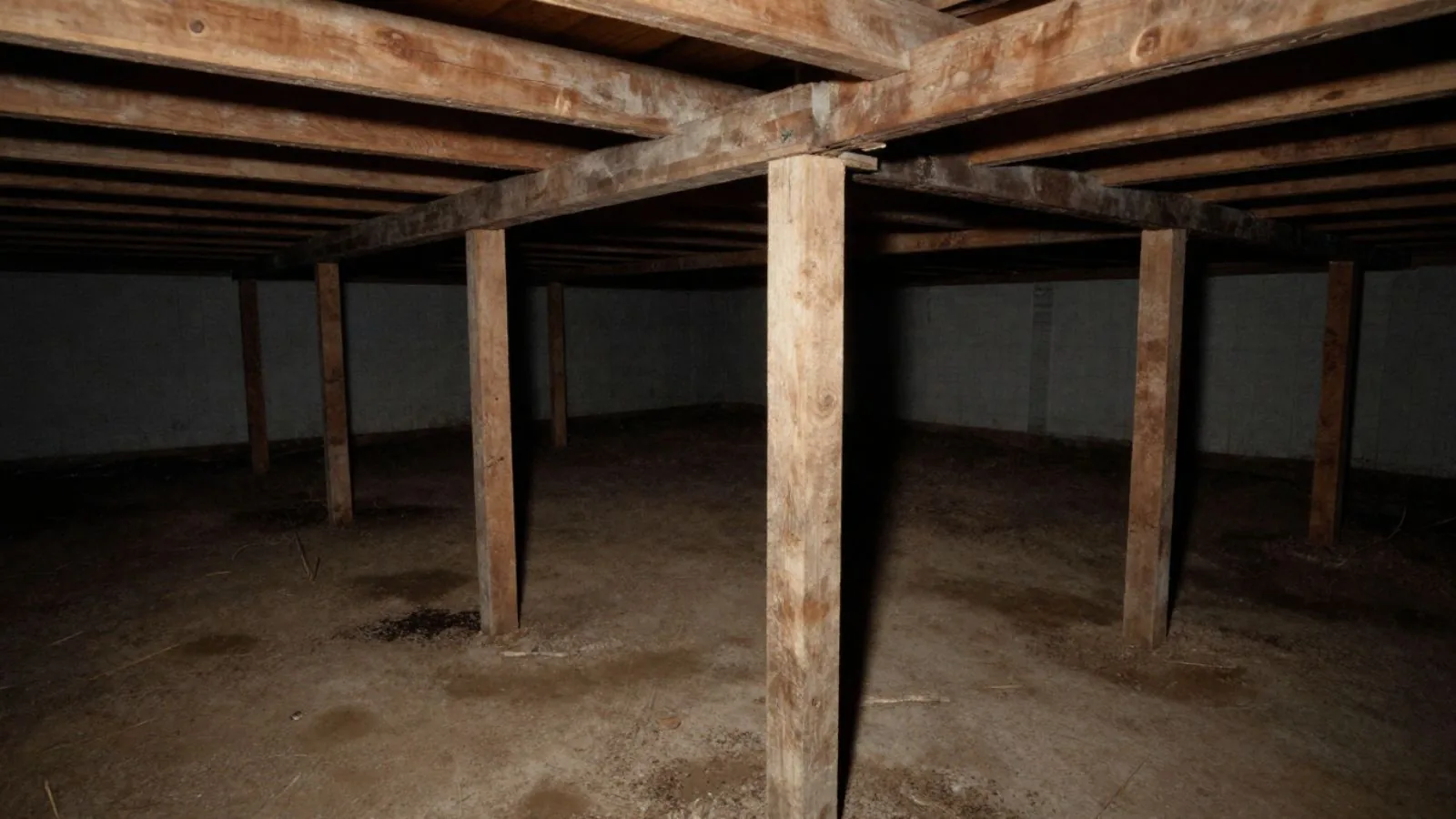
Crawl space water damage in Fairhaven, MA happens under the house where you rarely look, and it often shows up first as a musty smell, cold floors or a spongy spot in a room above. If you see standing water, call dispatch, which is open 24/7, and stay out of the space if it is flooded or if wiring is wet.
A crawl space is the shallow area between the ground and the first floor. It holds joists, subfloor, insulation, ducts and plumbing lines, so water there reaches many systems at once.
How water gets into a crawl space
Water arrives from a leaking supply or drain line, a roof or gutter that sends runoff toward the foundation, groundwater after heavy rain or a high tide that pushes water up through soil. Poor drainage around the foundation is a common reason.
Humidity is a quieter source. Warm moist air condenses on cool surfaces under the house, and wet insulation then holds water against the joists.
What gets damaged
Subfloor and joists can absorb moisture, insulation sags and falls, and ducts can sweat. Dirt floors may be covered with a vapor barrier that can be displaced or torn. Wood that stays damp invites mold and rot.
The town's hazard mitigation plan notes nearly 3,000 of Fairhaven's 7,447 housing units were built before 1940. Access to the space under any house can be tight, and older construction varies widely.
Water on the floor right now?
☎ Call (774) 483-4896Extraction and drying in a tight space
Crews use compact pumps and wet vacuums to remove standing water. Air movers and dehumidifiers are placed so air actually moves through the space and out of it. Wet insulation is removed because it holds water against framing.
Moisture readings on joists and subfloor tell crews whether drying is finished. The structural drying page explains the process in more detail.
Mold and odor questions
A musty smell from under the floor points to long-term moisture. EPA guidance says drying wet materials within 24 to 48 hours usually avoids mold, so older wetness needs a closer look. Mold remediation follows the published S520 standard, and health questions belong to a physician.
The mold remediation page explains testing and removal, and says to ask whether your state licenses mold work.
Fixing the cause
Drying does not help if water keeps coming back. Gutters and downspouts should send water away from the foundation, grading should slope away and any leaking line should be repaired. Vapor barriers and sealing are building projects and not restoration work.
If a pipe was the source, the burst pipe page and the basement water damage page describe related situations.
Safety before you enter a crawl space
Crawl spaces are tight, dark and often damp, with wiring, pipes and sometimes standing water close to where you kneel. Do not enter one with standing water or exposed wiring, and never go in alone.
If you suspect mold, remember that EPA guidance recommends limiting disturbance and finding the moisture source first.
- Look from the access opening with a strong light first.
- Stay out if water touches wiring.
- Wear gloves, boots and a mask if you must go in.
- Tell someone before you enter.
- Do not remove insulation yourself.
What shapes the cost of crawl space water damage
Crawl space jobs vary with access and how much of the space got wet.
- Access
- Low clearance and tight openings slow every step.
- Water source
- A leaking line is simpler than a recurring groundwater issue.
- Insulation
- Wet insulation must be removed and replaced.
- Area
- Larger footprints need more equipment.
- Underlying problem
- Drainage or vapor control work is separate from drying.
Coverage depends on cause. Sudden plumbing failures are often covered while groundwater seepage is often not. Check your policy and ask your insurer.
Damp space under the house? Call (774) 483-4896 and get access, scope and price explained.
Crawl space symptoms and what they suggest
Use this to describe what you see.
| What you notice | What it can mean | Next step |
|---|---|---|
| Musty smell upstairs | Long-term moisture below | Request a moisture survey |
| Standing water | Leak or groundwater | Stay out and call |
| Sagging insulation | Wet insulation | Plan for removal |
| Soft spot in floor | Wet subfloor or joists | Avoid heavy weight and call |
| Condensation on ducts | Humidity under the house | Dry, then fix air sealing |
Shoreline towns and wet ground
The hazard plan lists 29.4 miles of coastline for Fairhaven, so many houses sit near tidal water, and wet soil under a house is a reasonable concern after storms. Check the FEMA flood map for your address and ask the Building Department about foundation vents or flood openings.
Crews serve Fairhaven and shoreline towns such as Mattapoisett for crawl space losses.
Frequently Asked Questions
Should I go into a flooded crawl space?
No. Standing water can hide electrical hazards and bacteria. Call for help before entering.
Does a vapor barrier fix moisture problems?
It helps control ground moisture, but it is a building improvement. Restoration dries the damage, and a contractor installs the barrier.
Is a musty smell always mold?
Not always, but it signals moisture. Testing and inspection tell you what is present.
Can wet joists be saved?
Often yes, if they are dried promptly and show no rot. Meters and inspection decide.