
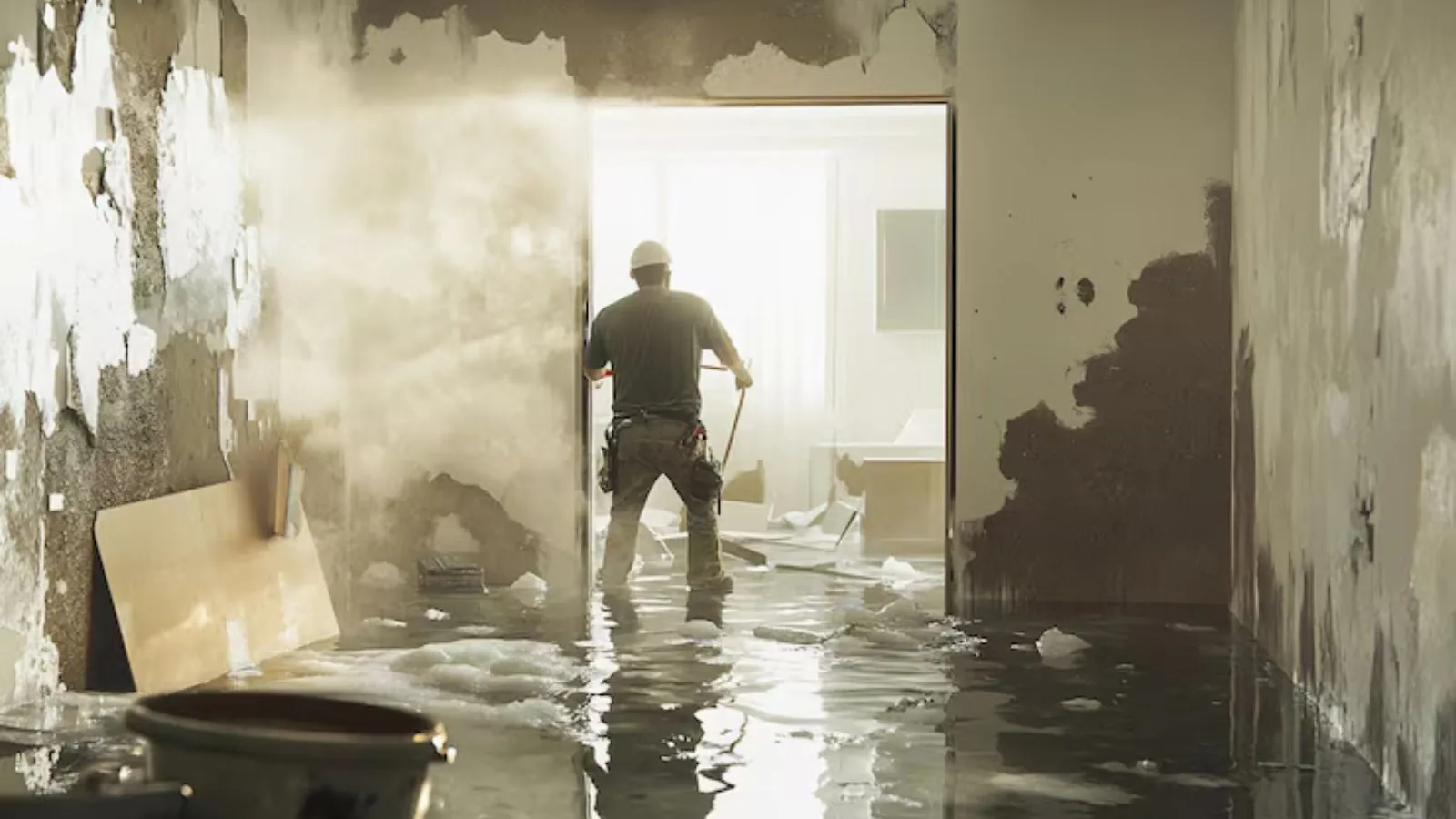
A flooded basement in Fairhaven, MA is an emergency because water spreads through finished walls, stored items and utilities quickly, and the dispatch line is open 24/7. Do not enter standing water if outlets, the panel or appliances are below the waterline, and shut off power only if you can reach the switch safely.
This page covers water from rain, groundwater, a failed sump pump, a burst pipe or a backed up drain. Each source changes how the loss is handled.
Why basements flood
Water enters through floor cracks, foundation walls, window wells, the bulkhead and floor drains. Heavy rain raises groundwater, and a sump pump failure removes the main defense. Pipe breaks and water heater leaks add water from inside.
Fairhaven sits on Buzzards Bay with many low, coastal lots. For your exact property, check the FEMA flood map and ask the Fairhaven Building Department about local flood rules.
Old homes and low spots
The town's hazard mitigation plan counts nearly 3,000 of Fairhaven's 7,447 housing units as built before 1940. Older foundations often use stone or block, with seams where water can enter, and floors may slope toward corners or old drains.
Pumps and hoses have to be placed with those low spots in mind, and the water extraction page covers the equipment.
Water on the floor right now?
☎ Call (774) 483-4896Sump pump failure
Pumps fail from power outages, stuck floats, clogged intakes or age. A battery backup helps during outages, and a test every few months catches problems early. If your pump failed, the water was probably groundwater, which can carry soil and bacteria.
Contamination matters for what is kept. Wet drywall, insulation and carpet in finished basements are usually removed, as the wall and drywall page explains.
Cleanup, drying and mold prevention
Crews extract water, remove wet materials that cannot be saved and dry the structure with air movers and dehumidifiers. Basement humidity control matters afterward, and EPA suggests keeping indoor humidity between 30 and 50 percent.
If you see growth or smell mustiness days later, see mold remediation for testing and removal.
Sewage and flood water in a basement
If water came up a floor drain or toilet, treat it as sewage and read the sewage backup page. If it came from outside during a storm, the flood damage page explains the difference.
Standard homeowners policies often exclude flood and sewer backup unless added. Check your policy.
What shapes the cost of basement water damage
Basement jobs vary with depth, finish level and what the water carried.
- Water depth and volume
- Deeper water takes more pumping and drying.
- Finished or unfinished
- Finished walls and floors add scope.
- Water source
- Groundwater, clean pipe water and sewage are handled differently.
- Stored contents
- Boxes and furniture may need moving or disposal.
- Prevention work
- Pumps and drainage repairs are separate trades.
Coverage depends on the source. Sump pump overflow and sewer backup often need an endorsement, and flood needs a separate flood policy. Check your policy.
Water in the cellar? Call (774) 483-4896 from a dry spot and get scope and price explained.
Basement water sources and handling
The source tells you what to expect.
| Source | Water type | Usual handling |
|---|---|---|
| Burst pipe | Clean | Extract and dry |
| Water heater | Clean | Extract and dry |
| Groundwater | Possibly contaminated | Extract, remove porous items |
| Sump pump overflow | Possibly contaminated | Extract, remove porous items |
| Floor drain backup | Sewage | Remove and disinfect |
Before the next storm
Test the sump pump, clear gutters, move items off the floor and keep drains clear. Keep an emergency number handy. Take photos of your basement now so you can show what changed.
Crews serve Fairhaven and nearby towns such as Acushnet and Marion.
Frequently Asked Questions
Do you handle basement water damage emergencies at night or on weekends in Fairhaven?
Yes. Basements flood during storms at any hour, and the Fairhaven line is open 24/7. Call from a dry, safe spot, describe the water level and source, and dispatch arranges the earliest response it can.
Is it safe to pump out the water myself?
Pumping too fast can stress walls, and electrical risk is serious. Ask for guidance before starting.
What can be saved?
Hard items often clean up. Porous items such as cardboard, carpet and insulation are usually removed after groundwater.
How do I prevent a repeat?
Keep gutters clear, test the pump, grade soil away from the house and ask a contractor about drainage.
Will mold follow?
Quick drying lowers the risk, and EPA guidance says 24 to 48 hours is the target.