
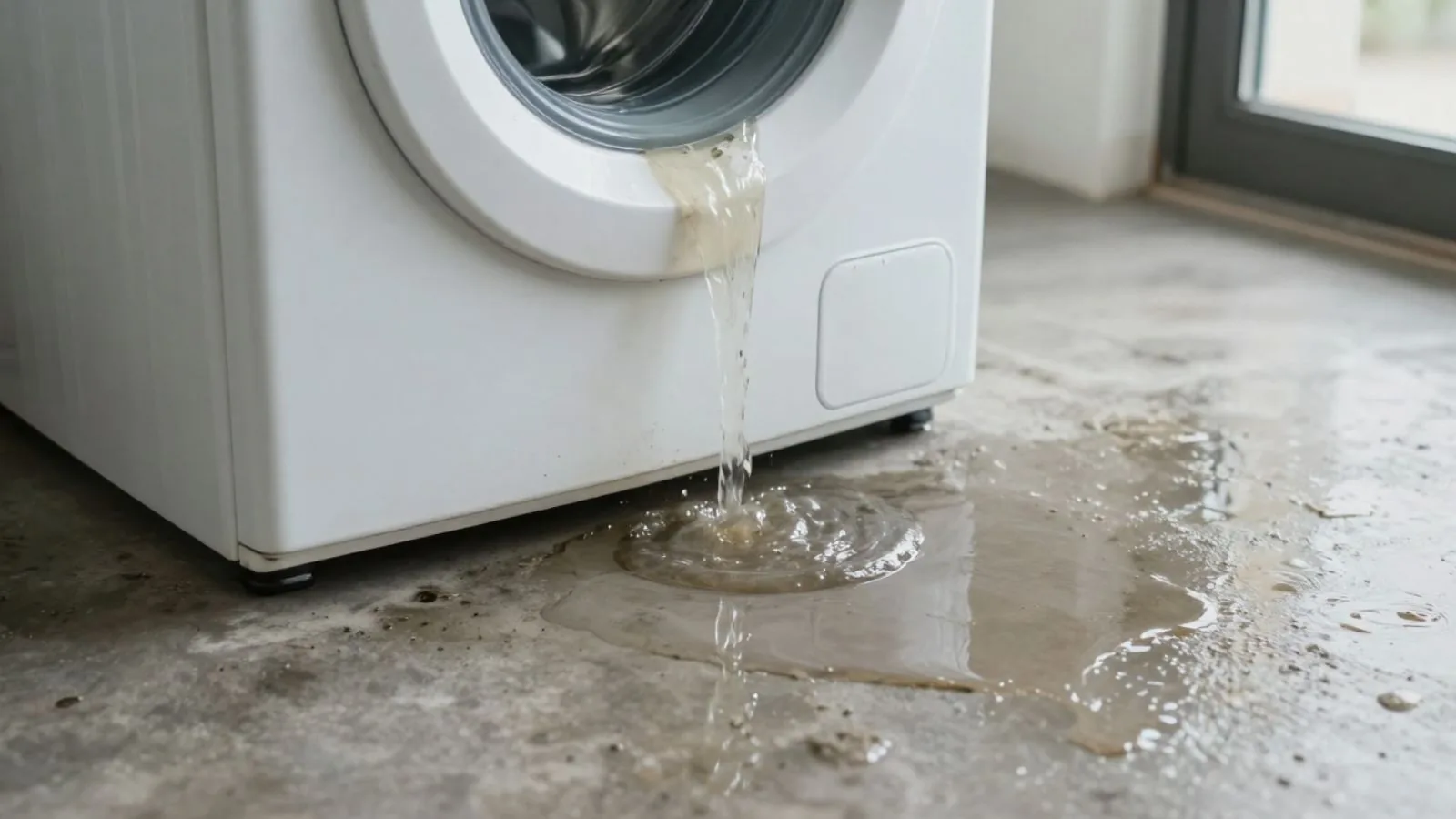
An appliance leak in Fairhaven, MA is an emergency once water reaches the floor, and the dispatch line is open 24/7. Unplug the appliance if the outlet is dry, close its shutoff valve and move rugs, cords and belongings away from the water. If the water reaches outlets or the panel, stay out and call the utility or 911 about the risk first.
This page covers failures of the appliance or its connections, such as washing machine hoses, dishwasher supply lines and refrigerator ice-maker lines. The damage usually spreads under flooring and into cabinets or walls next to the appliance.
Common appliance leak sources
Washing machine supply hoses are the most frequent failure, since they sit under constant pressure. Dishwashers leak from door seals, supply lines and drain connections. Refrigerator and ice-maker lines are thin plastic or braided tubes that can crack or loosen.
Unlike a burst pipe, many appliance leaks are slow. A small drip behind a washer or under a dishwasher can run for weeks before a floor feels soft or a smell appears.
Slow leaks versus sudden failures
A sudden hose burst floods a room quickly and is usually obvious. A slow leak soaks the subfloor and cabinet base quietly. The longer water sits, the more likely wood, particleboard and drywall are damaged beyond drying.
Insurers often distinguish sudden and accidental losses from long-term seepage, so record when you first noticed the leak.
Water on the floor right now?
☎ Call (774) 483-4896What gets checked after a leak
Crews check the floor around the appliance, the wall behind it and any cabinet that shares the wall. Moisture meters and a thermal camera reveal water under vinyl, tile and laminate. Cabinet bases and kicks are checked for swelling.
If the leak is in a kitchen, the kitchen water damage page explains cabinet decisions. If it ran into a hardwood floor, see the hardwood floor page.
Drying versus replacing
Clean water from a supply line can often be dried in place when handled promptly. Laminate flooring and particleboard swell when wet and often cannot be saved. Natural wood may dry and recover, but sometimes cups or buckles.
Crews decide material by material, using readings rather than appearance. Equipment stays in place until the readings match dry reference areas.
Renters, landlords and shared walls
The town's hazard mitigation plan notes that about 24 percent of Fairhaven homes are renter-occupied. In a rental, an appliance leak raises questions about who owns the appliance and who pays for repairs. Photograph the damage, notify the landlord in writing and keep copies.
Leaks can also move through shared walls and floors into a neighboring unit, so speed and documentation protect everyone involved.
Safety first while you wait
Water and electricity do not mix, and appliances are plugged in. The National Electrical Code (NFPA 70) is the reason outlets near sinks and laundry areas are protected, but a wet floor can still carry risk. Treat standing water around a plugged-in appliance as live until the power is off.
The published ANSI/IICRC S500 standard also asks crews to assess the water category before work, since drain-hose water from a washer or dishwasher is not the same as clean supply water.
- Shut the supply valve to the appliance.
- Unplug it only if the floor is dry where you stand.
- Switch off the circuit at the panel if water reaches the outlet.
- Photograph the hose, valve and floor before cleanup.
What shapes the cost of appliance leak water damage
Appliance leak jobs depend on how far the water traveled and how long it ran.
- Duration
- A leak caught right away affects far less than a long slow drip.
- Flooring
- Laminate and particleboard cost more to replace than tile or sealed concrete.
- Cabinets and walls
- Water that reached cabinet bases or drywall adds scope.
- Drying
- Readings set the number of drying days.
- Appliance repair
- Fixing or replacing the appliance is separate from water cleanup.
Coverage for sudden appliance leaks is common, while repeated seepage may be excluded. Read your policy, ask your insurer and keep records of when you first noticed the problem.
Appliance flooded the floor? Call (774) 483-4896 and get the scope explained first.
Which appliance leaks and why
This chart lists common causes and what to check.
| Appliance | Common leak point | What to check |
|---|---|---|
| Washing machine | Supply hose or drain hose | Hose ends, floor and wall behind |
| Dishwasher | Door seal or supply line | Cabinet bases and flooring |
| Refrigerator | Ice-maker or water line | Floor under and behind the unit |
| Water softener | Fittings or brine line | Floor and nearby drain |
| Sump or utility sink | Discharge or connections | Basement floor and walls |
Handling an old leak you just discovered
If a floor is soft or a cabinet base is swollen, treat it as a long leak. Stop using the appliance, shut the valve and have moisture mapped before anything is covered up. A musty odor can point to hidden moisture, and mold remediation explains testing and removal when moisture has sat.
Crews serve Fairhaven and nearby towns such as Acushnet for appliance leaks of every size.
Frequently Asked Questions
Do you handle appliance leak water damage emergencies at night or on weekends in Fairhaven?
Yes. Leaks often start at night or while no one is home, and the Fairhaven line is open 24/7 including weekends. Call, name the appliance and say whether the valve is closed, and dispatch arranges the earliest response available.
Should I replace my washer hoses?
Many plumbers recommend replacing rubber washer hoses periodically and using braided hoses. Ask your plumber what suits your connections.
Can a small leak cause big damage?
Yes. A slow leak can soak a subfloor over weeks, and the damage often shows up only when flooring softens.
Who handles the appliance repair?
An appliance technician or plumber repairs the appliance. Restoration crews handle the water damage.
Will my cabinets be removed?
Not always. Cabinet bases are checked with meters and removed only when they are soaked or swollen.