
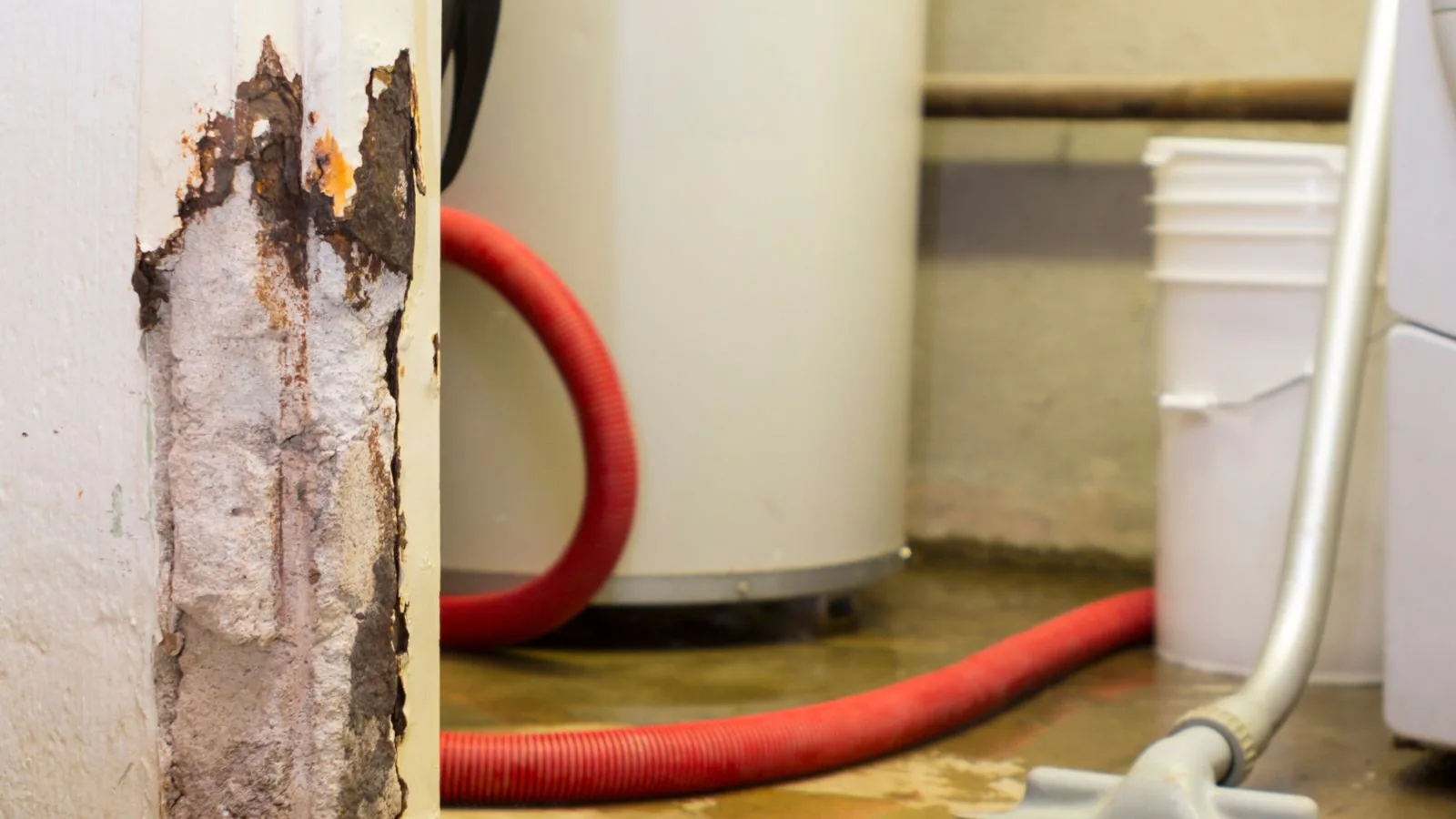
If water is standing in your Fairhaven, MA home or business right now, treat it as an emergency, and know that the dispatch line is open 24/7. Stop the source if you can, shut the main water valve, lift valuables off the floor and keep people and pets out of the water. Emergency water extraction removes standing water with pumps and extraction units before it reaches drywall, flooring and framing.
Extraction is only the liquid-removal step of a water loss. Once pooled water is gone, the building still holds moisture, so the job moves on to structural drying and dehumidification until wet materials read normal again. Both steps are planned together so nothing is left damp behind a wall.
When standing water is an emergency
Water that sits for a day does more than make a mess. It wicks up drywall, swells wood trim and soaks the pad under carpet. EPA mold guidance says wet materials dried within 24 to 48 hours can usually avoid mold growth, which is why calling early matters.
Before anyone enters a flooded room, think about electricity. If water touches outlets, cords or the panel, stay out, and call the utility or 911 about any electrical or gas risk before calling the restoration line. Cut power to the wet area only if you can reach the panel while standing in a dry spot.
How a crew actually removes the water
Crews usually start with the deepest water. Submersible pumps clear anything over a few inches, then truck-mounted or portable extraction units pull the thin film that pumps leave behind. Wands with squeegee heads work carpet and hard floors, and wet vacuums handle corners, stair treads and tight closets.
Moisture meters and a thermal camera follow the extraction. They show where water went after it left the open floor, such as under baseboards, behind cabinet kicks and into the bottom foot of drywall. That map decides whether the next step is simple drying or opening up a wall.
Water on the floor right now?
☎ Call (774) 483-4896Which category of water you have
The published ANSI/IICRC S500 standard sorts water into three categories. Category 1 comes from a clean supply, Category 2 carries some contamination and Category 3 is grossly contaminated, such as sewage or floodwater that came in from outside. The category sets the safety gear, which materials can be dried and which have to be removed.
Water changes category as it ages. A clean supply-line leak that sits for days can be treated as contaminated, so speed protects more than carpet. If water came from a toilet, a floor drain or rising tide, read the sewage backup page or the flood damage page first.
Basements and older Fairhaven houses
The town's hazard mitigation plan counts about 7,447 housing units in Fairhaven, with nearly 3,000 built before 1940. Older houses often have basements with uneven floors, low spots near the bulkhead and sump pits that were added later. Water finds those low spots first, and pumps have to be set where the hose can reach them.
Neighbors across the Acushnet River in New Bedford and in nearby towns see the same pattern after heavy rain, so crews plan hose runs, stair access and a place to discharge before the first pump starts.
What happens after the water is out
Extraction is a starting point. Wet carpet and pad, soaked insulation and swollen baseboard are inspected and either dried in place or removed. A drying plan follows, with air movers and dehumidifiers placed according to moisture readings rather than guesswork.
If the water came from a failed pipe, the repair of that line belongs to a plumber, and the burst pipe page explains the order of work. If it came through a wall or ceiling, the ceiling water damage page covers what to check above the room.
What shapes the cost of water extraction
No honest company can name a total before seeing the loss. These are the factors that move the number on an extraction job.
- Water category
- Clean, gray or contaminated water changes protective gear, disposal and what can be saved.
- Depth and floor area
- Deep water over a large footprint takes more pumping time and more equipment.
- Access
- Stairs, tight bulkheads and long hose runs add labor.
- Contents
- Furniture and stored boxes have to be moved or lifted before extraction can reach the floor.
- What comes next
- Drying days and any rebuild are scoped separately from the pumping.
Insurance treats sudden and accidental water damage differently from gradual leaks, and flood damage is usually excluded unless you carry separate flood coverage. Check your policy or ask your insurer before you assume anything is covered.
Water on the floor now? Call (774) 483-4896 and the crew plan is explained before pumping starts.
Standing water situations at a glance
Where the water came from decides the first move. This table is a quick guide, not a diagnosis.
| Situation | What it usually means | First step |
|---|---|---|
| Water from a supply line | Clean water that turns riskier the longer it sits | Shut the main valve, then call dispatch |
| Rain entering a basement | Groundwater or a failed sump pump | Keep power off the wet area and lift contents |
| Tidal or storm flooding | Outside water, treated as contaminated | Stay out of it and call for protective gear |
| Backup from a floor drain | Contaminated water from the sewer line | Keep everyone away and call at once |
| Ceiling still dripping | Active leak above the room | Catch water, stop the source if possible |
Serving Fairhaven and the towns around it
Dispatch covers Fairhaven Center, East Fairhaven, North Fairhaven, Sconticut Neck and the other villages, plus nearby towns such as Mattapoisett. Fairhaven runs on water supplied through the Mattapoisett River Valley Water District, and the Fairhaven Water Department can help if you cannot find or turn your own shutoff valve.
Call the 24/7 line, describe where the water is and where it came from, and dispatch will tell you what to do while a crew is arranged.
Frequently Asked Questions
Do you handle water extraction emergencies at night or on weekends in Fairhaven?
Yes. The Fairhaven dispatch line is open 24/7, including nights, weekends and holidays. Call, describe the water, and dispatch arranges the earliest response it can while telling you what to do in the meantime.
How soon can extraction start after I call?
Response depends on the hour and crew availability. Dispatch gives you safety steps right away and arranges the earliest visit it can. No company can honestly promise an arrival time in advance.
Can I use my own wet vacuum?
A household wet vacuum helps with a small spill, but it cannot move the volume or reach the thin film left in subfloors. It also should never be used on water that may be contaminated or near electrical risk.
Does extraction alone fix water damage?
No. Pumping removes liquid water, but wet drywall, trim and flooring still hold moisture. Drying and monitoring follow extraction so materials return to normal readings.
Do I need to move furniture first?
Lift what you safely can onto blocks or counters and move electronics out of the water. The crew will move the rest and can tell you what is worth saving.