
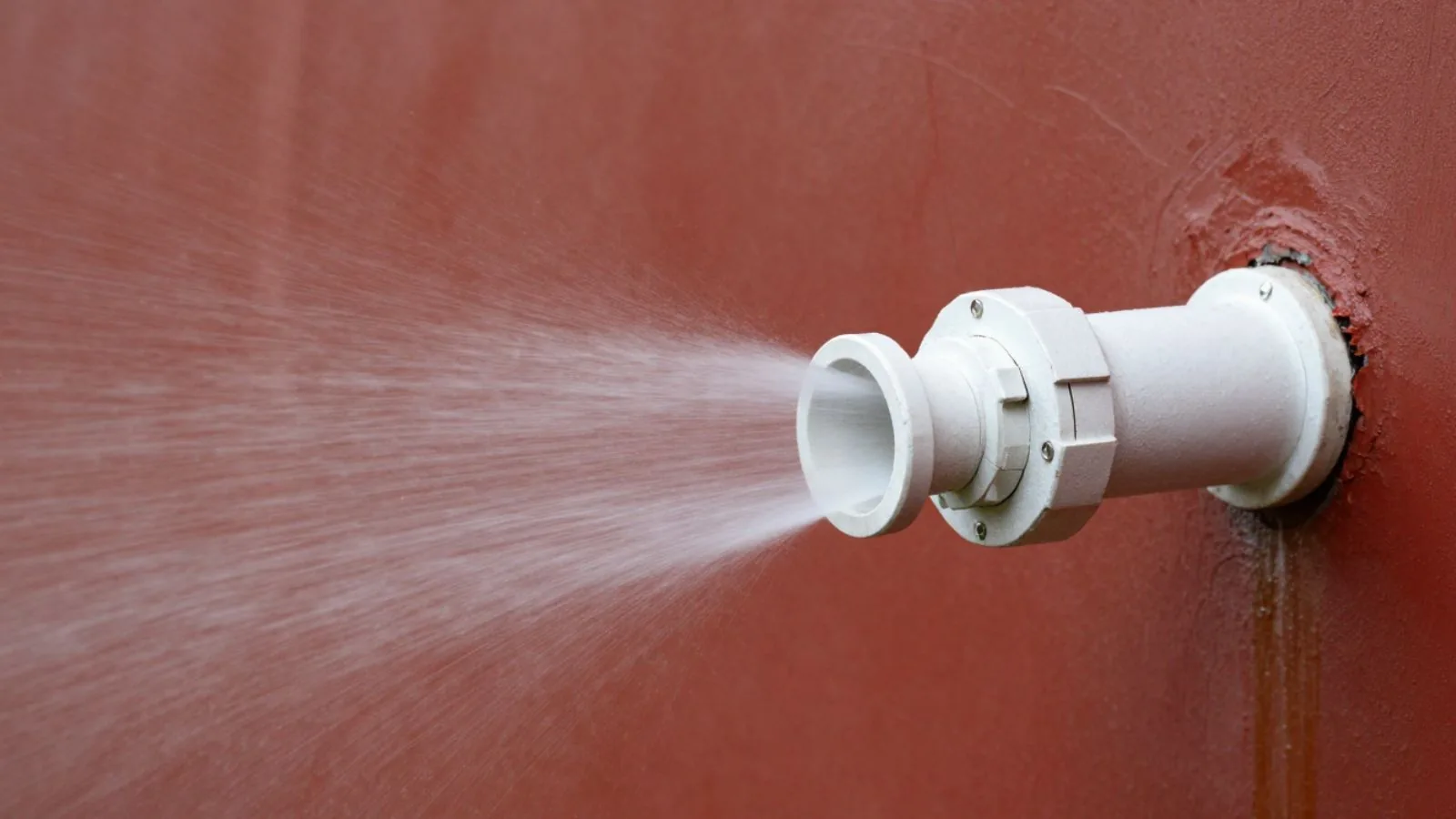
A frozen pipe in Fairhaven, MA becomes an emergency the moment the ice melts and water starts moving, and the dispatch line is open 24/7. If you hear dripping or see a wet wall, shut the main water valve, keep heat on in the house and lift belongings off the floor. Do not use an open flame to thaw a pipe.
Freezing itself rarely does the harm. Ice expands and can split a pipe or fitting, but the split is plugged until the ice melts. That is why many frozen pipe floods start hours after the coldest part of the night.
Why the water shows up after the thaw
A split pipe behaves like a sealed bottle while ice fills it. When the temperature rises or the heat comes back on, the ice turns to water and flows out of the split under full pressure. Many owners first notice a stain on a ceiling or a sound inside a wall.
If you found a frozen line that has not leaked yet, leave the main valve ready to close, open the faucet fed by that pipe and let warm air reach the pipe. Call a plumber and watch closely as it thaws.
Fairhaven winters and where pipes freeze
The town's hazard mitigation plan lists an average January temperature near 30 degrees Fahrenheit, so freezing nights are a normal part of winter on the South Coast. Pipes in exterior walls, unheated garages, crawl spaces, attics and basement corners are the usual trouble spots.
The Massachusetts Division of Insurance advises owners to insulate pipes, keep the home adequately heated, shut off and cover exterior faucets and consider opening cabinet doors under sinks during cold snaps.
Water on the floor right now?
☎ Call (774) 483-4896What the cleanup involves
Cleanup follows the same order as other supply-line failures. Stop the water, extract what is standing, map moisture with a meter and thermal camera, and open only the surfaces that stayed wet. Insulation in the affected cavity is often removed because it keeps water against framing.
Drying equipment then runs until readings return to normal. Because frozen pipe breaks often sit in cold exterior walls, crews pay attention to cold surfaces where moisture can linger. For the general process see burst pipe water damage.
Pipes behind cabinets and in ceilings
Kitchen and bathroom supply lines run through the coldest part of many walls. A break behind a vanity can soak flooring and a cabinet toe-kick before it is noticed. A break in an attic line can bring down a ceiling, which is covered on the ceiling water damage page.
If the leak reached cabinets, the kitchen water damage page explains how cabinet boxes and countertops are evaluated after drying.
Insurance and heating
Coverage for burst pipes generally depends on the home being heated and occupied. The Division of Insurance notes that policies typically cover sudden and accidental water damage only if the property was properly heated and not left unoccupied. If you were away, tell your insurer plainly and check your policy language.
Document everything with photos, keep the damaged section of pipe if the plumber allows it and write down the date you discovered the leak.
Named guidance and safety for thawing pipes
Never use an open flame to thaw a pipe. Slow warming with a hair dryer or warm towels is safer, and the Massachusetts Plumbing Code (248 CMR) governs repairs, so call a plumber if a pipe has split.
If water is already leaking, close the main first.
What shapes the cost of frozen pipe water damage
The cost of a frozen pipe loss depends on how long the water ran after the thaw.
- Time before discovery
- A break found at once soaks less than one found after hours away.
- Wall type
- Exterior walls often hold more insulation and take longer to dry.
- Rooms involved
- Water that dropped through a floor or ceiling widens the scope.
- Finish materials
- Hardwood, cabinets and plaster need different handling.
- Rebuild
- Opened walls and removed finishes are replaced after drying.
Many policies respond to a sudden pipe break when the home was heated and occupied. Gradual leaks and neglect are treated differently, so check your policy and ask your insurer before assuming coverage.
Thawed pipe leaking? Call (774) 483-4896 and hear the drying plan before work begins.
Frozen pipe warning signs and responses
These signs point to a pipe that is frozen or has already split.
| Sign | What it can mean | Response |
|---|---|---|
| No water at one faucet in cold weather | A frozen section | Open the faucet, warm the room, call a plumber |
| Bulging or frosted pipe | Ice inside the line | Do not use a flame, keep the main valve ready |
| Dripping after a thaw | A split now leaking | Close the main valve and call dispatch |
| Stain growing on a ceiling | Water above or in the wall | Catch water, shut off supply, call at once |
| Hissing in a wall | Pressure escaping a split | Shut the main valve immediately |
When the pipe is in a shared or rented space
Landlords and tenants should both photograph the damage and notify each other promptly, since heat and access often decide who handles which step. A restoration crew can document moisture so the repair record is clear.
Crews serve Fairhaven and nearby towns such as Acushnet when cold snaps cause several breaks across the area.
Frequently Asked Questions
Do you handle frozen pipe water damage emergencies at night or on weekends in Fairhaven?
Yes. Cold snaps do not follow office hours, and the Fairhaven line is open 24/7 including holidays. Describe the wet area and whether the main valve is shut, and dispatch arranges the earliest response it can.
Can I thaw a frozen pipe myself?
A hair dryer on low or warm towels can thaw an accessible pipe if you open the faucet first. Never use an open flame or a heat gun on a pipe in a wall.
Does a frozen pipe always burst?
No. Some pipes freeze and thaw without a split. Check for leaks as the pipe thaws, because any split begins leaking then.
How long does drying take after a frozen pipe leak?
It depends on how many layers got wet. Readings decide when drying is finished, not the calendar.
Who pays for repairs if I rent?
That depends on the lease and the cause. Document the damage, notify the landlord in writing and check the lease language.