
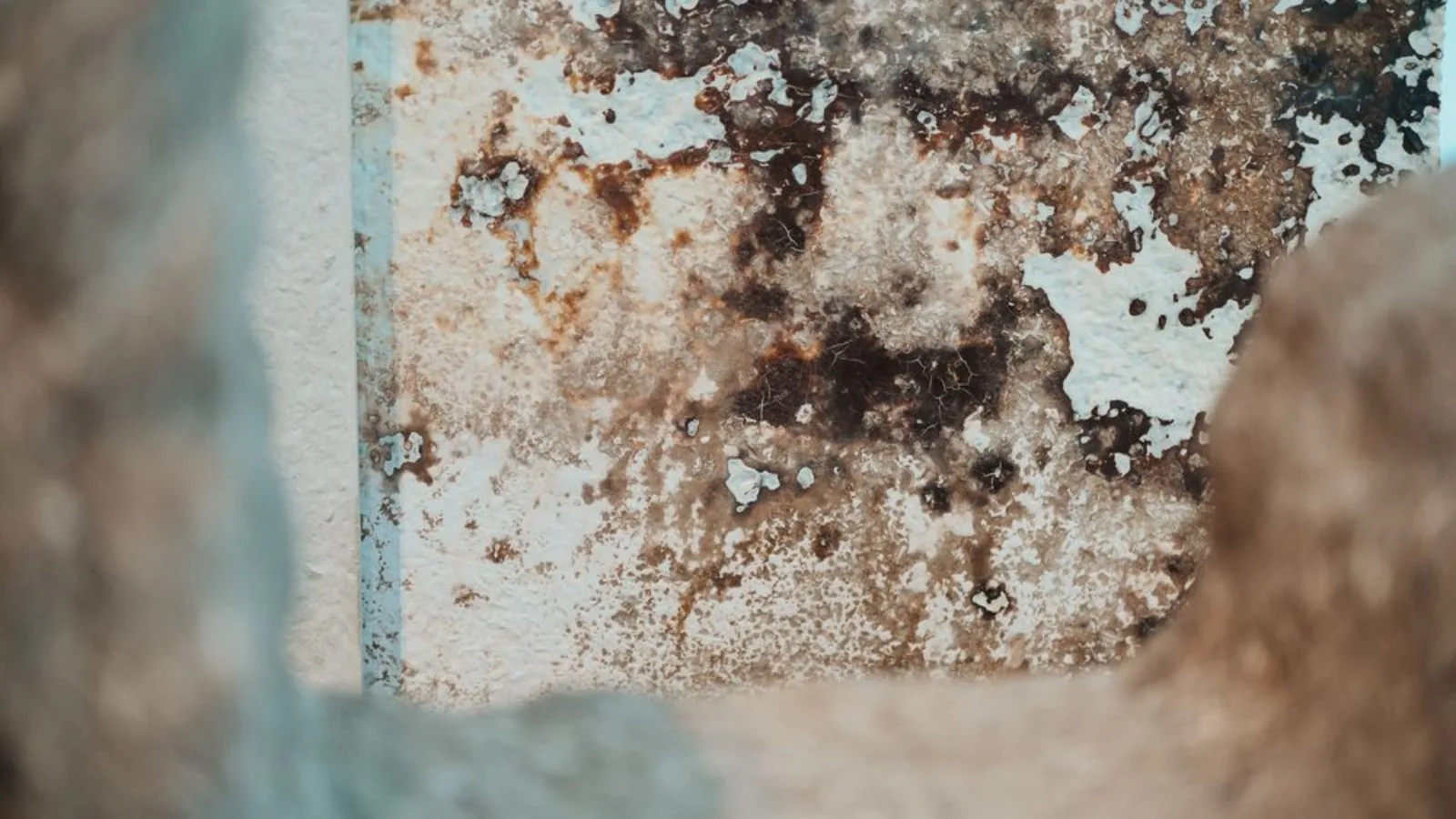
Walk into any hardware store in southeastern Massachusetts and you will find a wall of mold sprays, wipes, test kits and dehumidifiers. Some of them help with small jobs, and some do little more than make the problem look better for a week.
This guide explains what each type of product can reasonably do, where it stops and how to tell when buying more products is the wrong move.
Mold cleaning sprays and wipes
Household detergent and water work on small areas of hard, non-porous surfaces, according to EPA guidance. Specialty sprays can help with light surface staining in bathrooms. None of them dry the material behind the growth.
Read labels, wear gloves and eye protection, and never mix chemicals. A product that promises to kill mold permanently cannot promise to stop moisture from coming back.
Dehumidifiers
A dehumidifier is probably the most useful product on this list, since mold needs moisture. EPA suggests indoor humidity between 30 and 50 percent. A basement unit that drains to a floor drain or a pump will do more than one you have to empty by hand.
A household dehumidifier will not dry a wall that took on a lot of water. For that, professional equipment is matched to the space, as the structural drying page describes.
| Product | Helps with | Does not do |
|---|---|---|
| Detergent and water | Small hard-surface patches | Treat porous materials |
| Mold sprays | Light surface stains | Fix moisture |
| Dehumidifier | Lowering humidity | Dry soaked walls fast |
| Hygrometer | Showing humidity | Find hidden leaks |
| Test kits | Showing spores are present | Show how much or where |
Water on the floor right now?
☎ Call (774) 483-4896Home test kits
A settle-plate kit usually proves that mold spores exist in your home, which is true of almost every home. It cannot tell you how much growth there is or where it is. EPA does not recommend routine sampling as a first step.
If you need testing, an independent assessor can sample, interpret results and write a scope. That is different from a kit you open in your kitchen.
Fogging, encapsulants and paint
Foggers and mold-blocking paints are sold as quick fixes, but they cover or treat surfaces and leave the cause behind. Paint over damp drywall can blister and trap moisture.
Encapsulants may have a place after removal and drying, and a crew can tell you if one fits the job. Using one on unfixed moisture only delays the problem.
When products are the wrong answer
If growth covers more than a few square feet, sits on drywall, carpet or insulation, or keeps returning, buying more product will not fix it. The mold remediation page explains containment and removal.
If the cause was a leak, read about wall and drywall water damage to see what happens to wet walls.
Reading labels before you buy
Product labels are the only reliable guide. Look for what surfaces the product is meant for, how long it must stay wet on the surface, whether it needs rinsing and what ventilation it requires. Many sprays are meant for hard, sealed surfaces only.
Be skeptical of words like 'permanent', 'guaranteed' or 'kills all mold'. Mold needs moisture, and no product changes the humidity in your walls.
A sensible shopping list
For most homes the useful items are cheap and boring. A hygrometer shows humidity, a dehumidifier lowers it, detergent handles small hard-surface patches and a good pair of gloves and goggles keeps you safe while you do it.
Beyond that, the best purchase is often a phone call before you spend more. If the growth is large, on porous material or keeps coming back, ask for a moisture assessment.
- Hygrometer to track humidity.
- Dehumidifier sized to the room.
- Detergent, buckets and cloths.
- Gloves, sealed goggles and a mask.
Professional equipment compared with store products
Professional dehumidifiers, air movers and HEPA filtered air scrubbers move far more air and remove far more moisture than a typical store unit. They are sized to the space and monitored with meters. That is why a house that stays damp with a store unit can dry in days with a crew.
If you have a damp room that will not dry, ask a crew for a moisture reading before you buy another unit.
What Fairhaven homes tend to need
Fairhaven is a coastal town, and its damp air and older housing, with nearly 3,000 of 7,447 units built before 1940 per the town's hazard mitigation plan, make humidity control the practical first purchase. A dehumidifier in a cellar and a working bathroom fan do more than a shelf of sprays.
Crews also serve nearby New Bedford and Marion, where salt air and older homes bring similar concerns.
Frequently Asked Questions
Do I need a test kit to know if I have mold?
Visible growth and a musty smell are usually enough to act on. A kit mostly shows that spores exist, which is normal.
What size dehumidifier do I need?
It depends on room size and dampness, and the label on the unit gives a guide. A very wet space needs more capacity.
Is vinegar a good mold cleaner?
Some people use it on small hard-surface patches, but it does not dry the area or fix the cause.
Are mold sprays safe around pets?
Read the label and ventilate. If you are unsure, ask your vet or choose plain detergent and water.
Do air purifiers remove mold?
A purifier with a HEPA filter can capture airborne spores, but it does not fix the moisture or remove growth on surfaces.