
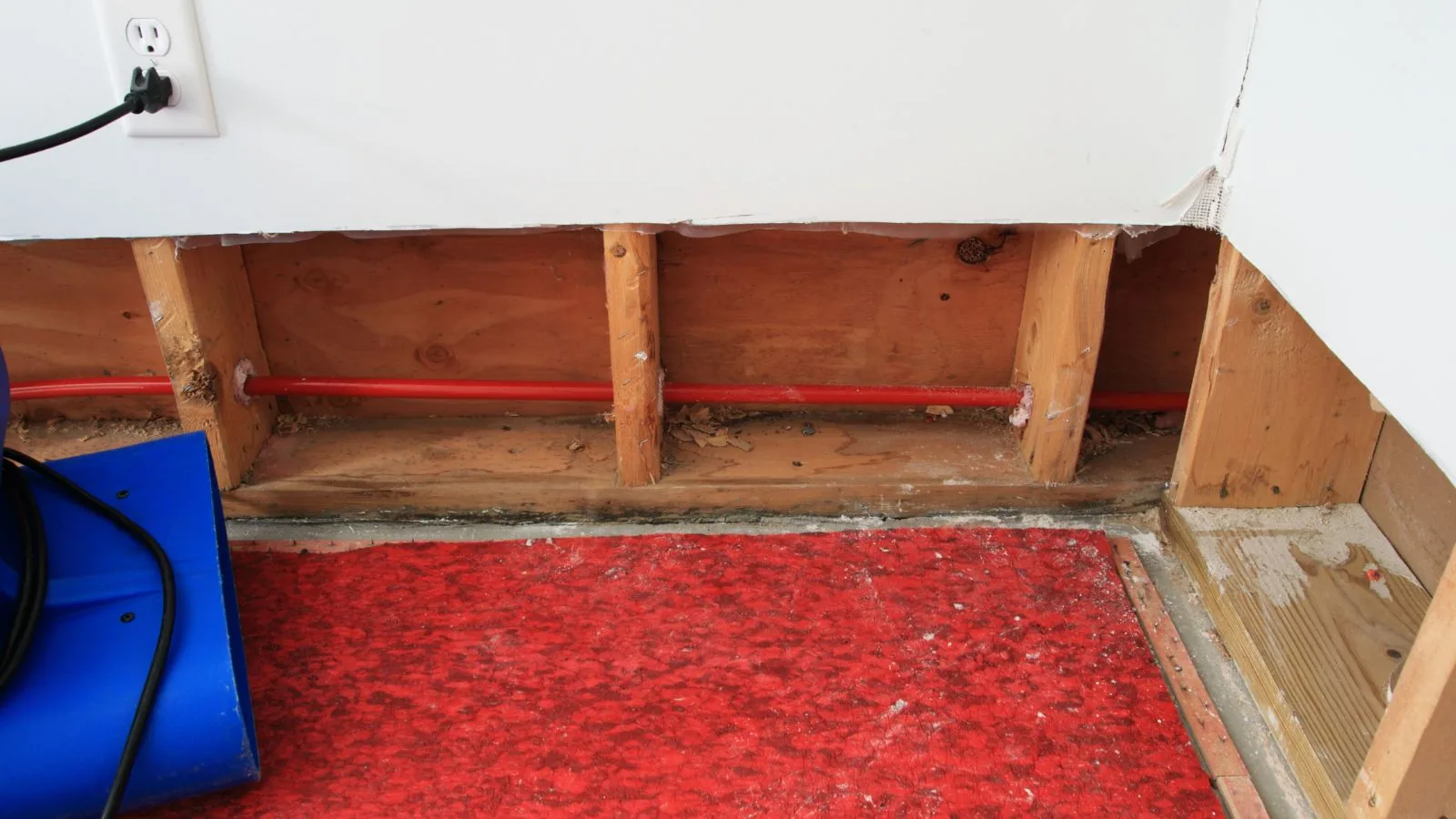
Everyone asks how long it will take, and the honest answer is that it depends. Drying time is set by what got wet, how much, how warm and humid the air is and how well the equipment is placed.
This guide explains what drives the timeline, why readings matter more than a calendar and what you can do to help it along.
The first 24 to 48 hours
EPA guidance says mold growth can usually be avoided if wet materials are dried within 24 to 48 hours. That is why speed matters. Extraction comes first, and drying equipment follows right away.
A quick start does not mean the job is finished in two days. It means moisture is being controlled.
Typical drying times by material
Carpet and drywall often dry in a few days with good airflow and dehumidification. Wood floors, plaster and concrete can take longer. Wall cavities and thick framing take time because moisture leaves slowly.
These are general patterns, not promises.
| Material | Drying behavior | What changes the time |
|---|---|---|
| Carpet | Dries quickly on top | Pad and subfloor stay wet longer |
| Drywall | Moderate | Cavity airflow and thickness |
| Hardwood | Slow | Species, finish and thickness |
| Plaster | Slow | Thickness and age |
| Concrete | Very slow | Depth and humidity |
Water on the floor right now?
☎ Call (774) 483-4896What speeds drying up
Removing standing water first, opening wall cavities when needed, running enough air movers and using dehumidifiers matched to the space all help. Keeping the room closed lets the dehumidifier work on a controlled amount of air.
Read the structural drying page for the equipment involved.
What slows drying down
Humid weather, cold rooms, thick materials, trapped water behind finishes and a continuing leak all slow drying. Opening windows on a humid day can make things worse.
If the source is still leaking, fix it first. The water extraction page explains removing standing water.
How you know it is done
Moisture readings in affected materials match the dry reference readings from unaffected areas. The crew records readings each visit. A smell or a feel is not enough.
Do not close up walls or lay new flooring before readings are normal.
What a drying visit looks like
On each visit the crew takes readings, adjusts equipment and notes progress. They may move air movers, open a cavity or add a dehumidifier. You may be asked to keep doors closed and leave equipment running.
Readings are written down. By the third or fourth visit, the numbers should be falling toward the dry standard. If they are not, the crew looks for a hidden source or a pocket of water.
Living in the house during drying
Equipment is loud and warm. Plan for noise, extra power use and some rooms off limits. Keep pets away from cords, and do not unplug equipment to charge a phone.
If the noise is a problem at night, ask the crew about options. Some equipment can be moved or scheduled.
- Expect fans and dehumidifiers to run day and night.
- Keep doors closed in drying rooms.
- Avoid walking on wet floors.
- Ask before moving equipment.
After drying: what comes next
When readings match the dry standard, equipment is removed. Cleaning, odor control and rebuild follow. If walls were opened, replacement of drywall, insulation and paint comes next. The wall and drywall page explains what is replaced.
Keep the final moisture logs. They show that the structure was dried correctly.
Why some rooms dry faster than others
Rooms differ in airflow, temperature and materials. A small bathroom with a tile floor may dry in a few days, while a large basement with a concrete slab, finished walls and carpet may take much longer. Closets and cabinets dry slowly because air barely moves inside them.
Crews open doors on cabinets and sometimes remove toe-kicks or baseboards to let air reach hidden areas. That is not extra demolition, it is how drying reaches the wet parts.
What can stretch the timeline
Hidden pockets of water are the most common reason a job runs long. Water can sit under flooring, inside wall cavities, behind baseboards and in insulation, where surface readings do not show it. When the crew finds a pocket, it opens that spot and adds airflow.
A second cause is a new source. If a pipe keeps seeping or a roof leaks again in the next rain, drying has to start over in that area. Fixing the cause early keeps the timeline honest.
- Hidden water in cavities.
- Humid weather and closed windows.
- Dense materials like plaster and concrete.
- A leak that was not fully repaired.
Safety while equipment runs
Drying equipment is electric and heavy. Keep cords clear, keep children and pets away and do not cover air movers. The ANSI/IICRC S500 standard treats monitoring as part of the work, so the crew's readings, not the feel of the room, decide when equipment leaves.
- Do not unplug equipment.
- Keep doors closed in drying rooms.
- Watch for new stains.
- Keep moisture logs.
Drying on the South Coast
Fairhaven's coastal humidity can stretch drying times, especially in July and August, so crews match dehumidifier capacity to conditions. In winter, a cold basement dries slowly because cold air holds less moisture.
Crews serve New Bedford and Acushnet with the same measured approach.
Frequently Asked Questions
Can I leave the equipment off at night?
Equipment usually runs continuously for best results. Ask the crew about noise and power.
Why is the crew still coming after the floor feels dry?
Moisture inside walls and subfloors may remain. Readings tell them when it is done.
Will my power bill go up?
Drying equipment uses electricity. Ask the crew for an estimate of run time.
Can drying be done in winter?
Yes. Heat helps, and a dehumidifier works better in a warm room.
Why does the dehumidifier collect so much water?
It is pulling moisture from the air and from materials. A large amount early on is a good sign that drying is working.